



Choosing the right CCTV camera is important for protecting your home, office, shop, or commercial property. Two popular options are PTZ cameras and fixed CCTV cameras. Both help monitor your property, but they work in different ways.
A fixed camera watches one particular area, while a PTZ camera can move, zoom in, and cover a wider space. So, which one is better for your security needs?
In this guide, we compare PTZ and fixed CCTV cameras, explain their main features, and help you choose the right option for your property. If you need expert guidance, you can also visit a trusted security camera store to explore suitable CCTV solutions.
1. What Are PTZ CCTV Cameras?
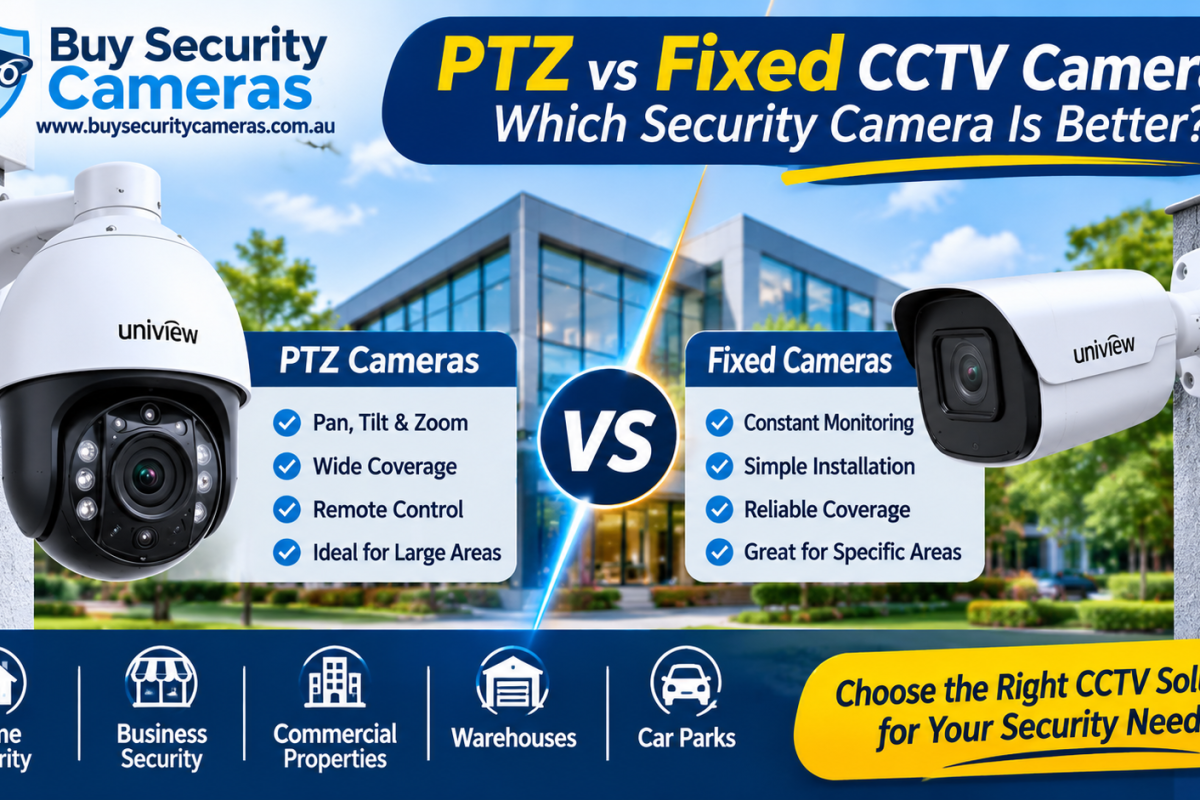
PTZ stands for Pan, Tilt, and Zoom. These cameras can move horizontally, move vertically, and zoom in on specific areas. This makes them useful for monitoring large spaces where a single fixed camera may not provide enough coverage.
Main Features of PTZ Cameras
- Pan movement: The camera can rotate left and right to monitor different directions.
- Tilt movement: It can move up and down to cover different viewing angles.
- Optical zoom: It can zoom in on distant objects while maintaining more image detail than digital zoom.
- Preset positions: Users can save viewing angles and move the camera to selected positions.
- Remote control: Compatible systems allow users to control camera movement through supported software or mobile applications.
Where Are PTZ Cameras Useful?
PTZ cameras are suitable for car parks, warehouses, factories, shopping centres, construction sites, and large outdoor areas. They are especially useful when security staff need to follow activity or inspect different parts of a property.
2. What Are Fixed CCTV Cameras?
Fixed CCTV cameras are designed to monitor one specific area. Once installed, they keep the same viewing direction unless someone physically adjusts their position.
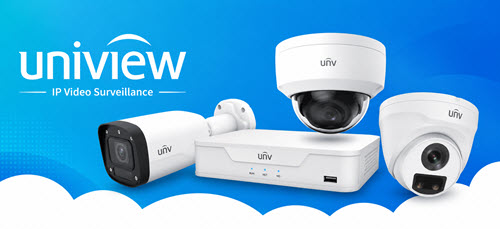
They are available in different styles, including dome, bullet, turret, and other camera designs. You can explore different models when you buy Uniview CCTV Cameras for home or business security.
Main Features of Fixed Cameras
- Constant monitoring: The camera continuously watches its selected area.
- Simple installation: Fixed cameras are generally straightforward to position and configure.
- Different designs: Dome, bullet, and turret models suit different installation locations.
- Reliable coverage: They provide a consistent view of important areas such as entrances, corridors, and driveways.
- Multiple resolution options: Different models are available to suit different image-quality requirements.
Where Are Fixed Cameras Useful?
Fixed cameras are ideal for front doors, reception areas, hallways, shop entrances, offices, warehouses, and building perimeters. They are particularly useful when you need continuous coverage of specific locations.
3. PTZ vs Fixed CCTV Cameras: Key Differences
Both camera types can improve property security, but their coverage and operation are different. The following table explains the main differences.
| Feature | PTZ CCTV Cameras | Fixed CCTV Cameras |
|---|---|---|
| Camera movement | Pan, tilt, and zoom | Fixed viewing direction |
| Coverage | Can monitor different directions | Monitors one selected area |
| Zoom | Often offers optical zoom | Depends on the camera model |
| Installation | May require more planning | Generally simpler |
| Monitoring | Can be controlled remotely | Usually provides a constant view |
| Best for | Large areas and active monitoring | Entrances and specific locations |
| Budget | Often higher for advanced models | Many affordable options |
Which Camera Provides Better Coverage?
PTZ cameras can cover a wider area because they can move and zoom. However, they cannot record every direction at the same time. When a PTZ camera turns away from one location, that area may no longer be visible.
Fixed cameras provide continuous monitoring of their selected viewing areas. For this reason, several fixed cameras can be a better choice when you need to record multiple locations at the same time.
Which Camera Is Easier to Install?
Fixed cameras are generally easier to install because they do not require movement controls or preset configurations. PTZ cameras may need more careful positioning, configuration, and user training to get the best results.
4. Which CCTV Camera Should You Choose?
The best camera depends on your property size, monitoring requirements, and available budget. Before buying, consider which areas need continuous recording and whether you need to monitor distant objects.
Choose PTZ Cameras If:
- You need to monitor large outdoor areas.
- You want to zoom in on distant activity.
- Security staff need to control the camera remotely.
- You want to monitor different viewing angles with one camera.
- Your property includes large yards, car parks, or industrial spaces.
If colour footage in low-light conditions is also important, explore Advanced Uniview OwlView Cameras and check the specifications of individual models.
Choose Fixed Cameras If:
- You need continuous monitoring of specific areas.
- You want to cover entrances, doors, and corridors.
- You prefer a simple camera installation.
- You need several cameras monitoring different locations.
- You want a practical CCTV solution for everyday security.
Can You Use PTZ and Fixed Cameras Together?
Yes. Using both camera types can provide more complete security coverage. Fixed cameras can continuously record important areas, while a PTZ camera can help security staff inspect wider spaces and zoom in on activity.
For a complete setup, consider Uniview Security Camera Systems that match your property size and camera requirements.
Remember that cameras also need a suitable recording solution. Compatible Uniview CCTV Recording Systems can help store and manage footage from your security cameras.
Frequently Asked Questions
1. Are PTZ cameras better than fixed CCTV cameras?
PTZ cameras are useful for large areas and remote monitoring. Fixed cameras are better for continuous coverage of specific locations. The best option depends on your security requirements.
2. Can a PTZ camera record in all directions at once?
Most conventional PTZ cameras monitor one viewing direction at a time. They move between positions rather than recording every direction simultaneously.
3. Are fixed CCTV cameras good for outdoor security?
Yes. Many fixed cameras are designed for outdoor installation. Check the weather protection rating and operating specifications before choosing a model.
4. Do PTZ cameras have optical zoom?
Many PTZ cameras offer optical zoom, but the zoom level varies by model. Check the product specifications to understand its zoom capabilities.
5. Can I connect PTZ and fixed cameras to one NVR?
Yes, provided the cameras and NVR are compatible. Check supported camera protocols, channels, resolution limits, and recording features before purchasing.
6. Should I install PTZ or fixed cameras for my business?
Fixed cameras are useful for entrances, counters, and other important areas. PTZ cameras can provide additional monitoring for large outdoor spaces. Many businesses benefit from using both.
Final Thoughts
PTZ and fixed CCTV cameras both offer useful security features. PTZ cameras are a strong option for monitoring large spaces, following activity, and zooming in on distant objects. Fixed cameras are better for continuous monitoring of specific areas.
For many homes and businesses, a combination of both can provide more complete coverage. Before choosing a CCTV system, consider your property layout, lighting conditions, recording needs, and budget.
Buy Security Cameras offers CCTV options to help you find a suitable security solution for your property.