


Security camera systems are only as reliable as the cables that connect them. While cameras, recorders, and monitoring software often get the most attention, the cabling infrastructure plays a crucial role in ensuring smooth video transmission, stable connectivity, and long-term performance. Understanding different security camera cable types helps homeowners and businesses choose the right surveillance setup for their needs.
If you are planning a new installation or system upgrade, it’s always smart to first shop the latest security camera systems that support modern cabling standards and future expansion.
In this beginner-friendly guide, we’ll explain the most common CCTV cable types, their advantages, applications, and how to select the best option for your security system.
Why Security Camera Cables Are Important
Security camera cables transmit video, data, and power between cameras and recording devices such as DVRs or NVRs. Poor cable selection can cause video signal loss, blurry footage, and system failures. High-quality cables help ensure stable performance, better video clarity, and reliable long-term surveillance coverage.
Different camera technologies require different cabling solutions. Traditional analog cameras rely on coaxial cables, while modern IP cameras use Ethernet or fiber optic cables. Choosing the right cables from the beginning prevents unnecessary replacement costs and improves system lifespan.
1. Coaxial Cable (RG59 & RG6)
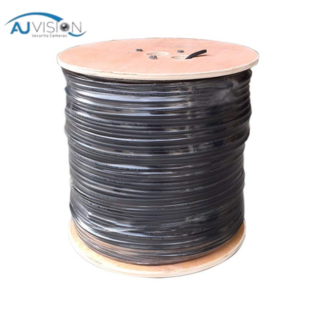
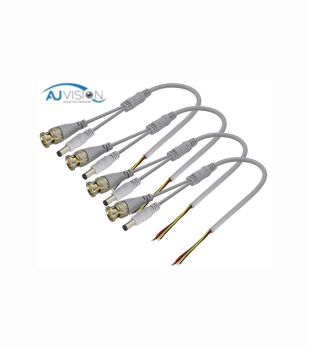
Coaxial cables are one of the most traditional and widely used cable types in CCTV systems. They are designed to transmit video signals from analog cameras to DVRs. Despite newer technologies, coaxial cables remain popular due to their durability and stable signal performance.
RG59 is commonly used in standard CCTV installations, while RG6 is better suited for longer cable runs where stronger signal integrity is required. Many installers still prefer coaxial solutions for simple and cost-effective surveillance setups.
For complete system compatibility, users often combine coaxial wiring with order high-quality alarm cables to ensure reliable power delivery and system safety.
2. Ethernet Cable (Cat5e, Cat6 & Cat7)
Ethernet cables are essential for modern IP camera systems. Instead of transmitting analog signals, IP cameras send digital data through a network connection, allowing real-time monitoring and remote access.
Cat5e cables are suitable for standard surveillance systems, while Cat6 cables support higher speeds and better performance for HD and 4K cameras. Cat7 cables provide advanced shielding and are ideal for large, high-bandwidth security networks.
If you are setting up an IP-based surveillance system, it’s recommended to buy LAN and Ethernet network cables online that match your camera resolution and installation distance requirements.
3. Fiber Optic Cable
Fiber optic cables are the most advanced option for security camera cabling. They transmit data using light instead of electrical signals, allowing ultra-fast and interference-free communication. These cables are commonly used in large commercial, industrial, and government surveillance projects.
Fiber optic solutions are ideal for long-distance installations where traditional cables fail to maintain signal quality. They are immune to electromagnetic interference, making them perfect for factories, airports, and shopping centers.
Although fiber optic systems require higher investment and specialized installation, they deliver unmatched reliability and future-proof performance.
4. Siamese Cable
Siamese cables combine video and power wiring into a single cable, making CCTV installations cleaner and easier. These cables are widely used in analog camera systems for homes and small businesses.
By reducing the number of cables required, Siamese wiring improves installation speed and minimizes clutter. Most Siamese cables include RG59 coaxial wiring along with power lines, ensuring stable video transmission and power delivery.
This type of cable remains a popular choice for beginners who want a simple and organized CCTV setup without complex wiring.
5. Power over Ethernet (POE) Cable
Power over Ethernet (POE) cables allow both data and power to be transmitted through a single Ethernet cable. This modern solution is widely used in IP surveillance systems because it simplifies installation and reduces hardware costs.
POE cameras connect directly to POE-enabled switches or injectors, eliminating the need for separate power outlets near each camera. This makes POE systems ideal for offices, warehouses, and smart homes.
For accessories and compatible display connections, installers often also buy computer display cables when integrating surveillance systems with monitors and control rooms.
How to Choose the Right Security Camera Cable
Choosing the correct cable depends on camera type, installation distance, and video quality requirements. Analog cameras work best with coaxial or Siamese cables, while IP cameras rely on Ethernet or POE cabling.
For high-resolution displays and monitoring systems, many professionals also order Ultra High Speed HDMI 2.1 cables to ensure smooth video output from DVRs and NVRs to monitors.
Budget, installation environment, and future expansion plans should always be considered when selecting surveillance cables.
Common Mistakes to Avoid
One common mistake is choosing cables based only on price. Low-quality cables can cause signal interference and system instability. Another mistake is ignoring distance limitations, which leads to weak video signals.
Outdoor installations also require weatherproof and UV-resistant cables to prevent damage. Proper planning and professional installation help avoid costly errors and ensure long-term performance.