




Modern security systems rely heavily on the quality of cabling used during installation. Whether you are setting up CCTV cameras, alarm sensors, motion detectors, or access control devices, choosing the correct alarm cable is extremely important. Many homeowners and businesses often struggle to decide between 4 core, 6 core, and 8 core alarm cables because each option is designed for different security requirements.
If you are planning to upgrade your surveillance setup or install a new alarm system, it is always smart to explore reliable security equipment from shop security cameras before selecting the right cable type. The correct cable improves signal transmission, enhances system stability, and helps prevent future maintenance issues. Understanding the differences between these cable options can help you build a safer and more reliable security network for your property.
Understanding Alarm Cables in Security Systems
Alarm cables are specially designed wires used to connect different security devices to a control panel or monitoring system. These cables carry power and communication signals between components such as PIR sensors, alarm sirens, keypads, CCTV cameras, and motion detectors.
The number of cores inside the cable determines how many separate electrical connections can be transmitted at the same time. A higher number of cores generally provides greater flexibility and support for advanced security systems. Choosing the correct cable ensures proper signal strength, smooth operation, and long-term reliability.
Security professionals often recommend selecting a cable that matches both your current needs and possible future upgrades. Investing in high-quality alarm cables reduces the chances of signal interference and system failure over time.
What Is a 4 Core Alarm Cable?
A 4 core alarm cable contains four insulated wires inside a protective outer sheath. This cable type is commonly used for basic alarm installations where fewer signal connections are needed. It is one of the most popular choices for small residential security systems because it is affordable, easy to install, and suitable for simple alarm configurations.
Most 4 core cables are used for PIR sensors, door contacts, panic buttons, and small alarm devices. Since the cable contains fewer wires, installation is usually cleaner and more straightforward.
However, the limitation of a 4 core cable becomes noticeable when additional features or future upgrades are required. If more devices need to be connected later, installers may need to replace the cable entirely. For small and simple systems, though, 4 core alarm cables remain a practical solution.
Advantages of 4 Core Alarm Cables
One major advantage of 4 core alarm cables is cost efficiency. They are generally cheaper than higher-core alternatives, making them ideal for budget-friendly installations. Homeowners installing a small security system can often complete their project without spending extra money on unnecessary wiring.
Another benefit is flexibility during installation. Because the cable is thinner and lighter, it can easily fit through walls, ceilings, and tight spaces. Installers often prefer it for quick residential projects where cable routing must remain neat and hidden.
Additionally, 4 core cables work well for straightforward security applications that do not require multiple communication channels. They provide reliable performance for sensors and alarm devices while maintaining stable signal transmission. For many small homes and apartments, a 4 core cable delivers everything needed for effective protection.
What Is a 6 Core Alarm Cable?
A 6 core alarm cable contains six separate insulated wires inside the outer protective covering. This additional wiring provides greater flexibility for more advanced alarm installations. Many professional security installers prefer 6 core cables because they support both current and future system requirements.
These cables are commonly used in medium-sized residential and commercial properties where extra wiring may be needed for advanced sensors, tamper circuits, or additional communication features. The extra cores help reduce the need for replacing cables during future upgrades.
A 6 core cable is often considered the ideal balance between affordability and functionality. It gives installers more room to work with while still remaining manageable during installation. For users planning to expand their alarm systems later, a 6 core cable offers excellent long-term value.
Benefits of Using 6 Core Alarm Cables
One of the biggest advantages of 6 core cables is future-proofing. Even if only four wires are currently needed, the extra two cores can support future upgrades without requiring new cable installation. This can save both time and installation costs later.
Another benefit is improved flexibility for more complex security systems. Devices such as glass break sensors, dual-tech detectors, and advanced control modules may require additional wiring connections. A 6 core cable can handle these needs more effectively.
Installers also appreciate the convenience of having spare wires available during troubleshooting or repairs. If one wire becomes damaged, an unused core can often replace it without rewiring the entire system. This makes maintenance easier and improves overall system reliability.
What Is an 8 Core Alarm Cable?
An 8 core alarm cable includes eight insulated wires designed for advanced security applications. These cables are commonly used in larger commercial buildings, warehouses, office complexes, and sophisticated smart security systems.
The additional cores provide maximum flexibility for handling multiple devices, advanced communication systems, and integrated security features. Many professional installers use 8 core cables when designing expandable security infrastructures that may require future enhancements.
An 8 core cable is especially useful for installations involving integrated alarms, CCTV systems, access control, and smart automation devices. It supports multiple signal pathways while maintaining strong and stable communication between security components.
Although it costs more than lower-core alternatives, the long-term benefits often outweigh the initial expense for complex security environments.
Advantages of 8 Core Alarm Cables
The main advantage of 8 core cables is versatility. With more available wires, installers can support larger systems with advanced features and multiple devices connected simultaneously. This makes them ideal for commercial and industrial security applications.
Another important benefit is scalability. Businesses planning future expansions can easily integrate additional devices without replacing existing wiring. This reduces downtime and avoids expensive rewiring projects later.
8 core cables also provide better support for integrated smart security systems. Modern properties often combine alarms, CCTV cameras, access control, and intercoms into a single platform. Using higher-core cables helps maintain stable communication between all connected devices.
For professional installations where reliability and long-term performance matter most, 8 core alarm cables are often the preferred solution.
Comparing 4 Core vs 6 Core vs 8 Core Alarm Cables
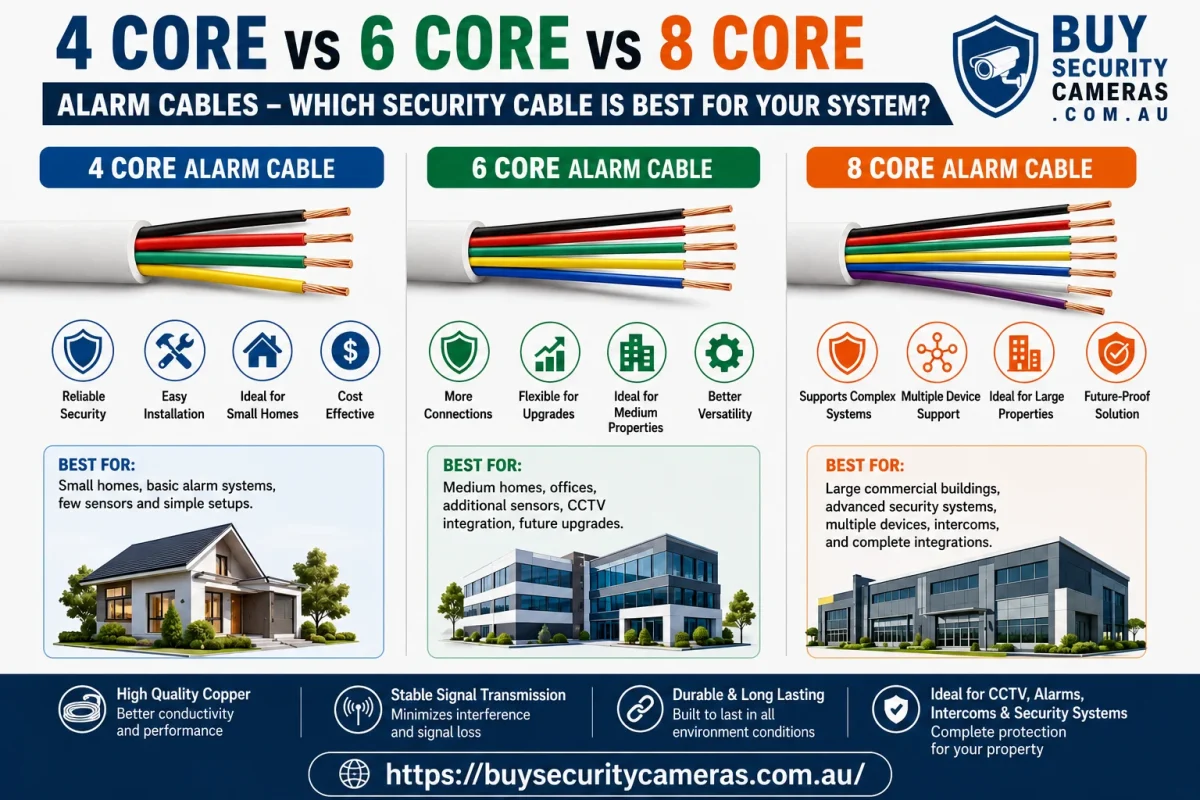
Each alarm cable type serves different security needs. A 4 core cable is suitable for simple residential alarm systems with limited devices. It is cost-effective and easy to install but offers minimal flexibility for future upgrades.
A 6 core cable provides a better balance between affordability and expandability. It works well for medium-sized homes and businesses where additional devices may be added later. Many installers consider it the most practical option for general-purpose security installations.
An 8 core cable is designed for advanced and large-scale security systems. It supports integrated technologies, multiple devices, and future expansion plans. While the initial cost is higher, it delivers greater long-term value for commercial applications.
Choosing the right cable depends on your property size, device requirements, future expansion plans, and overall security goals.
Which Cable Is Best for Home Security Systems?
For most standard homes, a 4 core or 6 core alarm cable is usually sufficient. Small apartments and simple residential systems often perform perfectly with 4 core cables because only basic sensors and alarm devices are connected.
However, homeowners planning smart home integration or future upgrades may benefit more from using 6 core cables. The extra wiring allows flexibility for adding additional sensors, smart automation, or enhanced alarm functions later.
If the property includes multiple CCTV cameras, smart access control, or integrated communication systems, investing in higher-quality components such as outdoor CCTV camera kits can further improve the overall security setup while ensuring long-term compatibility with advanced systems.
Choosing the Right Cable for Commercial Installations
Commercial buildings generally require more advanced wiring solutions because they often include multiple alarm zones, surveillance systems, access control units, and integrated communication devices. In these situations, 6 core and 8 core cables are typically the preferred options.
Larger businesses benefit from the scalability offered by 8 core cables. They support future system growth while reducing installation complexity during upgrades. Warehouses, offices, schools, and industrial facilities commonly use higher-core alarm cables to manage multiple security devices efficiently.
For installations involving networking equipment and structured connectivity, premium computer cable solutions to maintain stable communication performance across the entire infrastructure.
Importance of Cable Quality in Security Systems
Selecting the correct number of cores is important, but cable quality is equally critical. Poor-quality cables may suffer from signal loss, electrical interference, and reduced durability over time. High-quality alarm cables provide stronger insulation, better conductivity, and improved long-term performance.
Professional-grade cables help maintain stable communication between alarm devices and control panels. They also reduce the risk of false alarms caused by signal interruptions or poor electrical connections.
In modern security environments, many systems also integrate access control and communication technology. Combining reliable alarm wiring with advanced devices smart intercom systems creates a more secure and connected property management solution.
Future-Proofing Your Security Installation
Future-proofing is one of the smartest strategies when installing security systems. Many property owners initially choose basic setups but later decide to expand their protection with additional cameras, detectors, or smart automation features.
Using higher-core alarm cables during the initial installation can prevent expensive rewiring later. Even if all cores are not immediately used, having spare wires available provides valuable flexibility for future upgrades.
Professional installers often recommend selecting reliable Security cables for alarm systems that support both current security needs and future technology integration. This approach saves time, money, and installation effort over the long term.
Conclusion
Choosing between 4 core, 6 core, and 8 core alarm cables depends entirely on your security requirements, property size, and future upgrade plans. A 4 core cable is ideal for simple residential systems, while 6 core cables offer better flexibility and expansion opportunities. For large commercial installations and integrated smart security systems, 8 core cables provide the highest level of scalability and performance.
Investing in high-quality alarm cables ensures reliable communication, improved system stability, and long-term protection for your property. Whether you are installing a basic home alarm or a complete commercial surveillance network, selecting the correct cable